Artisan Quality Control Of The World

PRODUCT CENTER
CONTACT US
If you are interested in cooperation, please contact us immediately, we will give you feedback as soon as possible!
Mobile

Angle steel commonly known as Angle iron, is perpendicular to each other into angular steel strip. There are equal Angle and unequal Angle. The two sides of an equilateral Angle are equal in width. Angle steel is a carbon structural steel for construction. It is a simple section of section steel. It is mainly used for metal components and the frame of workshop. It is required to have good weldability, plastic deformation and mechanical strength in use. The raw billet for Angle steel production is low carbon square billet, and the finished Angle steel is delivered in hot rolled forming, normalizing or hot rolled state.
Learn More
Wire rod, also known as wire rod, usually refers to a small diameter round steel disc. The diameter of the wire rod ranges from 5 to 19 mm (usually 6 to 9 mm), the lower limit of which is the minimum size of hot rolled steel section.
Learn More
Flat steel is steel with rectangular section and slightly blunt edge. Flat steel may be finished steel, or it may be used as blank for welding pipe and thin slab for rolling sheet.
Learn More
The structural layers of the color coated steel sheet from the inside to the outside are base material(cold rolled steel,galvanized steel), zinc/alzinc coating, chemical conversion coating.primer and finished coating. This kind of plate has novel surface color, strong adhesion, good corrosion resistance and decoration, and good processing performance, and can be cut, bent, drilled, riveted, crimped and so on.
Learn More
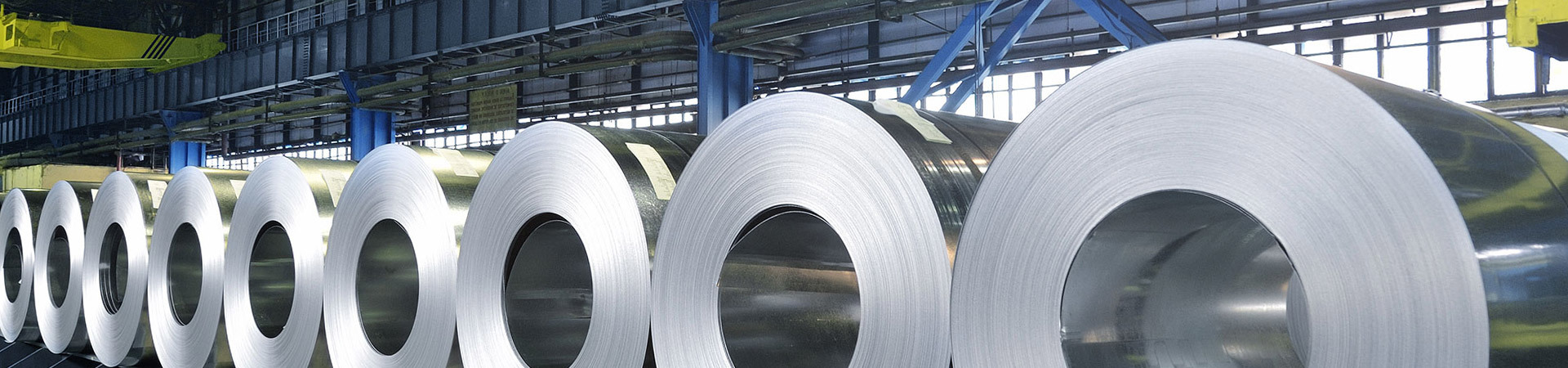
Galvanized coil is a thin steel plate with Q235 as the base material dipped into a melted zinc groove, so that its surface is adhered to a layer of zinc. It is mainly produced by continuous galvanizing process, that is, the rolled steel plate is continuously dipped in the melting zinc bath to make galvanized steel coil.
Learn More
Rail steel is usually used for railway fixed on the sleeper, sleeper for ballast. It is fastened by rail support, fastener, rail press, track splint, elastic bar, railway spike and other railway accessories. The bottom of the track is the track bed, which provides elasticity and drainage function for the track. Rails can also be laid on bases made of concrete, or even embedded in concrete. In order to withstand the pressure, impact load and friction of train operation, it requires sufficient strength and certain toughness. Quality requirements are strict, in addition to the guarantee of its chemical composition, but also require the inspection of mechanical properties, drop weight test and acid leaching of low-power tissue.
Learn More
CONTACT US
Tel : tel:+8613181739195
Email : hdtsteel@aliyun.com
WhatsApp:+8613181739195
Address : Room 2301, Unit 1, Building 1, Fortune One Plaza, Huaiyin District, Jinan City, Shandong Province


GET A FREE QUOTE
Copyright : HDT Tubing Co., LTD., Seo Tags